One Destination. Justice.
John Wingo worked for 3M Company in Aberdeen, South Dakota. He recorded what happened when he reported harassment. Six plaintiffs later sued in Minnesota. This archive follows their cases and the attacks John Wingo says he and his family faced after he spoke up. Start with the workplace recordings, follow the court filings, then hear why he is asking for an independent review in Colorado.

John Wingo · Lead plaintiff
When Something Feels Off, Keep a Record
Three states figure in this story. Aberdeen, South Dakota, is where John worked. Minnesota is where the six lawsuits ended before trial. Colorado is where John lived when he filed and where he later sought help. The Timeline puts the events in date order. The Court Proceedings tab pairs the plaintiffs’ filings with the judges’ orders. The Evidence Library lets readers listen to the recordings and read the underlying documents.
About 3M, the Aberdeen plant and the Minnesota lawsuits
The company behind the plant
3M is a global manufacturer based in Maplewood, Minnesota. It makes respirators and other protective equipment, industrial adhesives and abrasives, materials for vehicles and electronics, and consumer products such as Scotch tape and Post-it notes. For the year ended December 31, 2025, 3M reported $24.948 billion in net sales and $3.250 billion in net income attributable to 3M. The first figure measures sales across the company. The second is its profit for the year.
Where John Wingo worked and lived
John grew up in Colorado and moved to Aberdeen on a football scholarship to Presentation College. In 2017 he began working for 3M at its Aberdeen plant. His amended complaint places him on machine 203 with fellow plaintiff Desiree Holler. He challenged how 3M handled training, promotion and his termination after he reported discrimination. His amended complaint identifies Colorado as his residence. Vaughn Wingo worked at the same plant through Manpower, his employer on a contract for 3M.
Why the cases were in Minnesota
John filed on April 20, 2022, in the U.S. District Court for the District of Minnesota. Robert Rieger, Titus Kargbo and Desiree Holler also filed separate cases that April. Vaughn Wingo filed on July 28 and Nevely Randle on July 29, 2022. John’s complaint identified 3M as the sole defendant and cited its Maplewood headquarters as the basis for filing there.
John Wingo says none of the six plaintiffs lived in Minnesota when they filed. Two lived in Colorado, including John himself, and four lived in South Dakota. The pleadings expressly identify Colorado for John and Vaughn and South Dakota for Holler and Randle. The amended complaints for Rieger and Kargbo describe their work in Aberdeen without specifying their state of residence.
The court handled discovery across the six cases while each kept its own case number. Magistrate Judge John F. Docherty ruled on discovery. On July 17, 2024, District Judge Ann D. Montgomery dismissed all six complaints with prejudice for failure to prosecute. The cases ended before a trial on the workplace claims.
3M’s 2025 Form 10-K, Items 1 and 8 · John Wingo’s Aberdeen interview · John’s amended complaint, ¶¶ 1–9, 33 · The six complaints and filing history · Discovery order · Dismissal order, p. 2
At 3M’s plant in Aberdeen, South Dakota, John Wingo reported harassment to management. Those meetings troubled him. He began recording them so that, if anyone questioned his account, he could play back what he had reported and how management had answered.
In August 2021, Wingo brought documents to a meeting with lawyers. He says he trusted them to review the paperwork and gave them neither access to his recordings nor permission to copy his phone. He filed suit in Minnesota on April 20, 2022. In October 2023, a judge asked the plaintiffs’ attorney how much of the complaints was true. Wingo was outside the courtroom when the judge asked.
Wingo believes false accusations were used to discredit the plaintiffs. One discrepancy he points to is a July 2022 docket entry that says he jointly signed a report. The signature pages list two attorneys. At the October 2023 hearing, the public transcript marks when the plaintiffs were sent outside. The recording covers that interval, including the passage marked “protect the Democrats” in the Plaintiffs’ Annotated Transcript.
Why John Wingo raises political weaponization
In July 2023, while the six cases were pending, John sent the Minnesota docket to the Colorado Springs mayor’s office. His family later reported threats and gunfire. John describes these incidents as attacks and asks whether information about his lawsuit was used to target him for speaking out. The email documents whom he contacted. Who read it, whether anyone forwarded it, and who was responsible for the reported attacks remain open questions.
Two places, three dates. The October 28 campus dispatch logs concern the child development center at Pikes Peak State College. John says his parents, Felicia and Ernest, were on the pickup list. The October 29 CPCD letter names Felicia in its restriction. The October 31 doorway recording concerns a different place: CPCD’s administrative office, where John had come for records.
On October 31, 2025, John went to CPCD’s administrative office seeking his son’s records. On body camera, an officer later recounted telling John he could go inside. John reported that Cody Crawford pushed him back out and described the push as an assault. The staff member told police he pushed John back and said John kicked the door. John disputes the property-damage charge. Police cited his mother, Felicia Wingo, for trespass. Read both accounts and visit A Father’s Record for the recordings and citations.
November 28, 2026. More than a year after John Wingo went to CPCD for his son’s records, he says he still does not have the complete file he requested. At an October 2025 home visit, his family asked who was working with his son and who directed that work. Eighteen days later, a police body camera recorded John asking for names at CPCD’s office. Hear the family at home and John at the office. In November 2026, the defense investigator sent John a copy of her request to CPCD and his signed release. Read the dated correspondence and John’s account.
On the October 31 body camera, an interviewer asks whom John sued. John answers “3M Company.” A separate clip captures officers discussing the Minnesota lawsuit among themselves. The federal case surfaced again in a recorded Colorado defense meeting. A speaker John identifies as his former public defender said it appeared John had received a settlement. John and a relative immediately denied it. John wants to know where that account started and whether it affected how officials responded to him. Hear the exchange and read John’s reasons for asking for an independent review.
Wingo’s family took the Minnesota recording to Atlanta so others could hear what happened while he was outside the courtroom. The Colorado record raises a separate question. A March 23, 2026 city court entry records a request to rewrite the ticket and lists repairs at $500. The later county summons lists $1,000. Start with the nine chapters below or go straight to the two charging records.
Compare the signature pagesHear the “protect the Democrats” passageTrace the settlement storyRead the police report
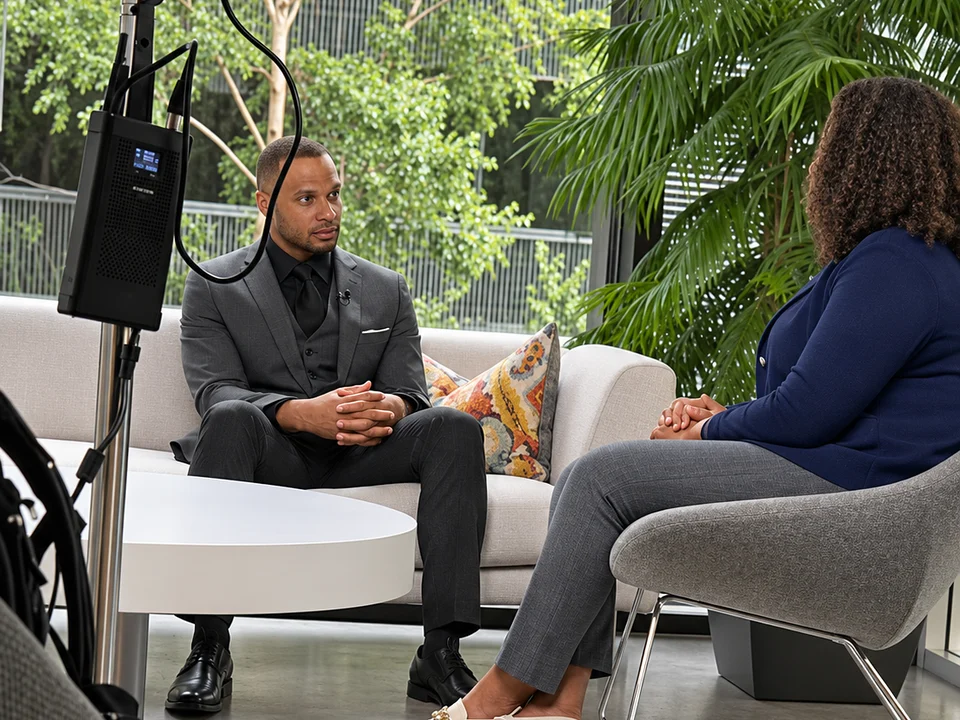
“How much of this is true?”
Magistrate Judge John F. Docherty
In this October 13, 2023 recording, Brian Kluk answers that a great deal of the complaints is true. Kluk and Jacob Tomczik were still in the courtroom. John Wingo had been told to step outside.
Two years later, Docherty spoke to new citizens in the same St. Paul courthouse about speaking up against injustice. John Wingo says that was precisely why he came to court. He wishes the judge had heard him.
Workplace, filings and evidence in the three states
What Happened After John Reported Racial Harassment at 3M?
In 2021, John Wingo recorded meetings about racial harassment he reported at 3M’s plant in Aberdeen, South Dakota. John Wingo and the other five plaintiffs later filed separate federal lawsuits in Minnesota. 3M denied liability. All six cases ended before trial.
John Wingo continued asking questions in Colorado. Who authorized a copy of his entire phone? What did counsel tell the judge while the plaintiffs were outside? Why was he later told he had received a settlement when he says he received no payment? He is sharing the records so readers can examine those questions.
Listen to the Archive Introduction
Read the original narration transcript
Start in Aberdeen, South Dakota, where John Wingo and five other workers at 3M raised concerns about their workplace. Each later filed a separate federal lawsuit in Minnesota. Open the timeline to follow the cases to the October 13, 2023 hearing in Saint Paul. Listen to the recording, then read the transcript and the judge’s order. For the later events in Colorado, start with the dates there. At each step, ask who is speaking, what the record shows, and which questions are still open.
Who authorized the copy of John Wingo’s phone?
In August 2021, John Wingo brought paperwork to a meeting with lawyers. He says he had yet to consider filing suit in Minnesota. More than two years later, he read in a federal court order that his former lawyers had obtained a complete copy of his phone. How did a meeting about paperwork lead to a copy of the conversations on his phone? Read Wingo’s account of the meeting.
After the closed October hearing, Judge Docherty granted the lawyers’ request to withdraw. Several plaintiffs asked for more time. The court denied their requests. The proceedings turned to what the plaintiffs had disclosed and what they still had to produce.
On , District Judge Ann D. Montgomery adopted Docherty’s recommendation and dismissed all six cases with prejudice for failure to prosecute. The plaintiffs never got a trial on what happened at the plant.
Why John Sought Help in Colorado Springs
John Wingo worked in Aberdeen, South Dakota. After 3M fired him, he moved home to Colorado Springs. The lawsuits stayed in Minnesota. From Colorado, John pursued answers about the lawyers handling his case, the evidence he had given them and the reports that he had received a settlement. Those efforts began while the cases were still open.
In 2025, a Colorado Springs detective recorded that a relative of lead plaintiff John Wingo discussed the 3M case during the police response to a dispute at Community Partnership for Child Development. The Colorado chapter follows that reference back through the emails, calls and police records.
Questions John Wingo Wants the Records to Answer
From Aberdeen to Colorado Springs, John sees a pattern. People raise concerns and then find themselves under scrutiny. He believes the retaliation continued after the 3M cases ended. The timeline shows when the events happened and who was contacted. Whether information from the federal cases influenced the Colorado proceedings remains an open question.
This archive puts the October 13 recording beside the court orders. It will trace who copied and received John’s phone data and compare Colorado dispatch logs and police reports with original audio, body-camera footage, and surveillance footage where available.
John denies receiving a 3M settlement payment. Why were people saying he had? A signed agreement and payment records could establish whether anyone authorized or disbursed money. Communications and decision records could show whether information from the lawsuits reached people handling the Colorado proceedings.
Key Events and Records
 Aberdeen · 2021On the plant floorHear John Wingo tell management why he felt unsafe at work.
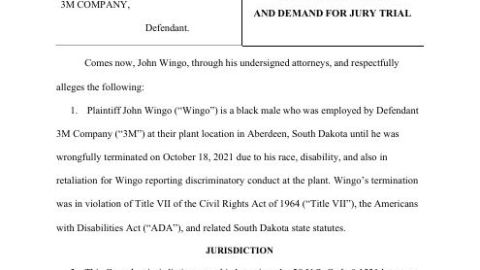 Minnesota · 2022Six plaintiffs file suitSee who filed each case and what the plaintiffs brought to federal court.
 Minnesota and ColoradoThe switch to McCollum CrowleyTrace the change of law firms and Wesley J. Cornwell’s role in the May 2022 agreement.
 St. Paul · October 13, 2023Inside the hearingHear the exchange about the complaints and the copy of John’s phone.
 Colorado Springs · 2023–2026The Colorado recordFollow John Wingo’s efforts to obtain school and police records in Colorado.
October 13 hearing film and transcript
St. Paul, Minnesota · October 13, 2023 · Hearing audio
What Happened at the October 13, 2023 Hearing?
The hearing recording captures what counsel said about John Wingo’s phone and the six complaints. It also records the judge’s remarks about letting the plaintiffs speak.
Read the Earlier Film Transcript · We Told the Truth
- 0:00 Narrator Viewer discretion is advised.
- 0:01 Narrator This film includes descriptions of racial harassment and a court hearing the plaintiffs found distressing.
- 0:07 Narrator Imagine waiting outside a courtroom while the judge asks your own lawyer how much of your complaint is true.
- 0:13 Narrator On October 13, 2023, six workers from the 3M Aberdeen plant faced losing their lawyers.
- 0:20 Narrator The judge asked everyone except two of the workers’ attorneys to leave.
- 0:24 Narrator Behind those doors, attorney Brian Kluk described the files his team received from John’s former law firm.
- 0:30 Narrator Listen to what he says they had.
- 0:32 Attorney Brian Kluk So all of a sudden we had, you know,
- 0:36 Attorney Brian Kluk previously we had what our client had given us.
- 0:39 Attorney Brian Kluk Now we had a full image of his cell phone.
- 0:41 Narrator John disputes authorizing a copy of his entire phone.
- 0:44 Narrator He wants to know whether anyone hacked or pinged it. The December court order traces a full copy back to August 2021.
- 0:51 Narrator Then Judge John Docherty turned to the workers who wanted to speak.
- 0:55 Judge John F. Docherty I know that some of the plaintiffs want to be heard this morning.
- 0:59 Judge John F. Docherty I do not want to hear from them.
- 1:03 Narrator The workers had described racial harassment, sex discrimination and physical violence.
- 1:08 Narrator With the workers still outside, the judge put a question to their lawyer.
- 1:12 Judge John F. Docherty How much of this is true?
- 1:16 Attorney Brian Kluk Your Honor, as far as the allegations of the complaint,
- 1:20 Attorney Brian Kluk there is a great deal of it that is true.
- 1:23 Narrator Kluk also questioned John’s conduct. But listen to what he said backed up some of the workers’ claims.
- 1:29 Attorney Brian Kluk For example, we have recordings of certain things
- 1:32 Attorney Brian Kluk which provide strong support for some of the allegations.
- 1:37 Narrator Near the end of the clip, the judge describes how he would warn the workers about speaking.
- 1:44 Judge John F. Docherty They are all over the age of eighteen,
- 1:47 Judge John F. Docherty and they ought to catch my drift.
- 1:50 Narrator When the courtroom reopened, the judge warned that anything the workers said could be used as evidence.
- 1:55 Narrator John Wingo recalls that the warning felt like a threat. The clip captures what the judge said in open court.
- 2:00 Judge John F. Docherty I advise you to remain silent,
- 2:04 Judge John F. Docherty but I cannot force you to remain silent.
- 2:08 Narrator John decided to speak. Listen to the way he brings the other workers into his answer.
- 2:14 John Wingo Plaintiffs, I kind of rallied us all from South Dakota
- 2:18 John Wingo when all this was happening to us.
- 2:22 Narrator The plaintiffs put it this way: We told the truth about what happened at the 3M Aberdeen plant.
- 2:28 Narrator John describes losing confidence in the court after counsel discussed the workers’ credibility outside his presence.
- 2:35 Narrator Wingo and the other plaintiffs are still asking for an independent review.
- 2:39 Narrator Hear the full recording. Read the transcript. Help bring their questions into the open.
- 2:44 Narrator John Wingo continues to seek answers.
Read the caption file for We Told the Truth (VTT) · Read the hearing record and public transcript
In the plaintiffs’ words
“We told the truth about what happened at 3M’s Aberdeen plant.” On October 13, 2023, after the plaintiffs were asked to leave the courtroom, Judge John F. Docherty asked, “How much of this is true?” Plaintiffs’ attorney Brian Kluk answered, “There is a great deal of it that is true,” and pointed to recordings he said supported parts of the complaints. Hear the recorded exchange.
Judge Docherty heard the plaintiffs’ own lawyer say that much of what they reported was true and point to recordings he said backed parts of their complaints. Docherty later recommended dismissal. Federal District Judge Ann D. Montgomery adopted his recommendation and dismissed all six cases with prejudice for failure to prosecute. None of the six plaintiffs got to present their case at trial. Read the dismissal order.
What the Recording and Court Orders Establish
In the phone excerpt, counsel describes encrypted data and a copy of the entire phone. On pages 5–6 of the December 18, 2023 discovery order, U.S. Magistrate Judge John F. Docherty recounts counsel’s account that the first law firm imaged the phone around August 10, 2021. Paragraph 2(i), on page 17, orders a later imaging and production of responsive material. John disputes authorizing a full copy and asks whether anyone hacked or pinged the phone. The excerpt describes the data that counsel received. The July 27, 2023 joint stipulation (docket 42, paragraph 3) dates counsel’s notice about the image to July 26. The December order gives August 26 for that notice. The two dates refer to the litigation correspondence, years after the first imaging. At about 22:05 in the longer recording supplied for the project, Judge John F. Docherty says the plaintiffs are over eighteen and “they ought to catch my drift.” In open court he advises the plaintiffs to remain silent and adds that he cannot force them to do so. John speaks. The public transcript records that later exchange on pages 13–14.
On October 13, 2023, U.S. Magistrate Judge John F. Docherty heard the lawyers’ request to withdraw. On July 17, 2024, U.S. District Judge Ann D. Montgomery dismissed the six suits with prejudice for failure to prosecute. That order did not decide whether the workplace allegations were true. The excerpts also do not establish a coordinated plot.
Hear the longer recording · Public transcript · pp. 8–9, 13–14 · Earlier phone image · pp. 5–6 · Compare the July and August dates · Later imaging directive · p. 17 · July 2024 dismissal
Film Credits
Film credits: synthetic narration; closed-session speaker identifications follow the source notes. St. Paul exterior: January 2022 photo by Chad Davis, cropped and color graded under CC BY 2.0. The film also uses the project’s interview still of John and images of the hearing transcript and discovery order.


Colorado events and the disputed settlement
Colorado Events and the Disputed Settlement
Questions Raised by the Case Record
Where John Worked, Sued and Asked for Help
The workplaces, courts and agencies had different roles. Trace the three states, hear the Colorado police follow-up, or see why John Wingo believes speaking up put him and his family at risk.
Why the story spans three states · The police calls · The retaliation concerns
John Wingo’s Settlement Account
John states that he never received, cashed, transferred, or accepted any settlement money from 3M Company.
Before the Courtroom
St. Paul, Minnesota · October 13, 2023“How much of this is true?”
By the time the plaintiffs’ lawyers asked to withdraw, witnesses had given depositions and a copy of John’s phone had surfaced. At the October 13, 2023 withdrawal hearing in St. Paul, U.S. Magistrate Judge John F. Docherty asked everyone except attorneys Brian Kluk and Jacob Tomczik to leave the courtroom. In the project’s recording, the voice identified in the accompanying source notes as plaintiffs’ attorney Brian Kluk says “there is a great deal of it that is true” about the complaint allegations. He goes on to explain what he believes the recordings support and to criticize John. Both parts are in the excerpt.
Hear the exchange with captions Follow the court proceedings
What did the judge rely on after the courtroom was cleared? Pages 8–9 of the public transcript mark the sealed discussion as omitted. When the courtroom reopened, John disputed the suggestion that the plaintiffs were feuding. The question raised by the recording supplied for this project is whether the private discussion stayed within the reasons for withdrawal or also reached the truth of the plaintiffs’ claims. What did the judge rely on, and what chance did each plaintiff have to answer it?
Read the Rules on the Closed Hearing and Withdrawal
Canon 3A(4) of the Code of Conduct for United States Judges generally restricts communications outside the presence of the parties or their lawyers. It permits communications authorized by law. If a judge receives an unauthorized communication about the substance of a matter, the canon calls for prompt notice of its subject and an opportunity to respond if requested. Sealing can protect client confidences. The decision to seal does not, by itself, establish the authority for excluding a party.
District of Minnesota Local Rule 83.7(c) requires good cause and notice to the client when counsel seeks withdrawal by motion. Notice of that motion and an opportunity to answer a particular statement are two separate issues. Compare the motion and proof of notice with the public transcript, the audio supplied for the project, and the judge’s stated reasons.
Federal judicial code · Canon 3A(4) · Local Rule 83.7(c) · Public transcript · pp. 8–9
Colorado Springs, Colorado · 2023–2026Where John Wingo Took His Questions
Lead plaintiff John Wingo sought help in Colorado Springs while the federal cases were pending. His account includes conversations with public officials, a police follow-up about Wesley J. Cornwell, and a later dispute over his child’s safety and school records. The October 31, 2025 police report lists a property-damage citation for John and a trespass citation for a relative. John believes the incidents involving him and his family are connected. The Colorado chapter traces whom they contacted, what the officials recorded and which questions remain open.
Read the Colorado events and police-report excerpts Hear the settlement statements
John Wingo in the news
In September 2023, John described the Aberdeen plant and the trips from Colorado to court in Minnesota in a television interview. KKTV also published 3M’s response. Read both accounts in Chapter 9 · News & Media.