
Chapter 06 Party To Ex Parte
Thanks For Coming To The Party.
Now, The Ex Parte.
“ex-PAR-tay”The invitation plays on two meanings of “party.” One is a gathering. The other describes John Wingo’s role as a plaintiff. Ex parte is the courtroom term.
Hear the courtroom exchangeEx parte · pronounced ex-PAR-tay
What’s an ex parte?
Ex parte means “on one side.” In a court case, it can describe a request made without notifying the opposing party, or a communication about the case with the judge outside the presence of the other side. Sealed describes access to a record. A judge can hear both sides in a closed courtroom. To understand what happened, look at who was there, what they discussed, and who had a chance to answer.
John Wingo wanted people outside Minnesota to hear the question the judge asked. He took the recording to Georgia. On April 10, 2024, after meeting attorney Erica Wilson in Tucker, he sent her a link to the hearing audio. Follow the recording to Atlanta.
Fight for Your Right to Be a Party.
In court, a party is someone directly involved in a lawsuit. John Wingo’s name was on the complaint. He could describe what he had personally seen and which records he had supplied. On October 13, when the judge asked how much of the plaintiffs’ allegations was true, the lawyers seeking to withdraw were in the room. Wingo was in the hallway.
That is where Wingo’s party joke comes from. He imagines describing the hearing to someone who has never been in a courtroom. The judge had a question about Wingo’s own case. “Well, what did you tell him?” During that exchange, Wingo had no opportunity to answer.
Federal judicial ethics rules generally direct judges to avoid one-sided communications about pending cases. A person who never hears an accusation cannot correct a wrong date, challenge a witness, or show the judge a document that changes the picture. Canon 3A(4) says that when an unauthorized communication reaches the substance of a case, the judge should promptly tell the parties what it concerned and give them an opportunity to respond if requested.
When can a court hear from one side?
Some laws expressly permit it. Under Federal Rule of Civil Procedure 65(b), a judge can grant a temporary restraining order without first notifying the other side when sworn facts show immediate, irreparable harm would come before a hearing, and counsel certifies the notice efforts and the reasons for proceeding without notice. The order must explain the reasons and is time-limited. Canon 3A(4) also permits certain scheduling or administrative communications under narrow conditions. The purpose, scope, and governing rule matter in each case.
Cornell Law · PartyCornell Law · DefinitionU.S. Courts · Canon 3A(4)Federal Rule 65(b)
October 13, 2023 · U.S. District Court for the District of Minnesota · St. Paul
John Wingo came to court to speak. The question came while he was outside.
John Wingo and five other plaintiffs had sued 3M over their treatment at the Aberdeen plant. Their lawyers, Brian J. Kluk and Jacob M. Tomczik, sought permission to withdraw without replacements. The hearing opened in public. Kluk said confidentiality concerns limited what he could say without a court order. U.S. Magistrate Judge John F. Docherty directed everyone except the plaintiffs’ two lawyers to step outside. John Wingo was among the plaintiffs whose complaints were under discussion.
- Inside
- Judge John F. Docherty and the plaintiffs’ two lawyers, Brian J. Kluk and Jacob M. Tomczik.
- Outside
- John Wingo was in the hallway. The judge had also directed 3M’s lawyers and the other attendees to step outside.
Between pages 8 and 9 of the certified public transcript, the reporter marks the sealed proceedings as omitted. When the hearing reopened, the judge discussed the lawyers’ withdrawal, attorney-client privilege and the time the plaintiffs would need to find new counsel. Wingo spoke then. His objection concerns the earlier exchange. On the recording, the judge asks about the truth of the allegations. Wingo wanted to answer that question himself.

The notation starts on page 8, lines 24–25, and ends on page 9, line 1. Turn to the original pages.
Later in the recording, Wingo hears the words “protect the Democrats.” That wording reflects his interpretation of the audio. Compare the recording and the Plaintiffs’ Annotated Transcript with the reporter’s notation where the public transcript resumes.
Certified transcript · pp. 8–9Wingo’s remarks after the room reopenedHear the political passage in contextFull hearing file
April 2024 · Atlanta area, Georgia
What Wingo carried from St. Paul to Atlanta
Wingo wanted people outside Minnesota to hear what happened in the courtroom. On April 10, he met attorney Erica Wilson for a consultation in Tucker, Georgia. By his account, he told her he was concerned about the court’s conduct. He had been in the hallway when the judge asked the plaintiffs’ lawyers about their allegations. He told Wilson that he believed the exchange was intended to protect Democrats. The words Wingo hears are “protect the Democrats.” That evening he emailed Wilson a link so she could listen for herself.
- March 20
- Wilson acknowledged the referral. Subsequent correspondence arranged the April 10 consultation in Tucker.
- April 10 · 3:18 p.m.
- Wingo emailed Wilson to thank her for the meeting.
- April 10 · 6:42 p.m.
- Wingo sent Wilson a private link identifying the recording of the October 13 Minnesota ex parte hearing on counsel’s motion to withdraw. Both times are Eastern daylight time.
The dated email identifies what Wingo sent and whom he addressed. He believes speaking up drew attention to ex parte proceedings among people unfamiliar with the term. The correspondence traces the recording as far as Wilson. An onward message to the YSL defense, a broadcast of the recording or an account from someone who acted on it could establish a further link.
Read the Atlanta correspondence source note (PDF)See the original excerptsFollow the whistleblower timelineWatch Erica Wilson discuss YSLHear the Minnesota passage
June–July 2024 · Fulton County Superior Court, Georgia
In Atlanta, who told the defense about the meeting?
On June 10, Chief Judge Ural Glanville met privately with prosecutor Adriane Love and attorney Kayla Bumpus during the prosecution of Jeffery Williams, known as Young Thug, and his co-defendants. Bumpus was standing in for witness Kenneth Copeland’s lawyer. Copeland joined the meeting, as did prosecutor Simone Hylton. They discussed immunity and what could happen if he refused to testify. The trial defendants’ lawyers had no advance notice and did not attend.
On June 10, Brian Steel, Williams’s attorney, objected in court. Glanville asked how Steel knew about the meeting. Steel declined to name his source and was held in contempt. The transcript of the chambers meeting entered the court record July 1. The Georgia Supreme Court later reversed Steel’s contempt judgment because a different judge should have heard that matter.
What the July 15 order actually decided
Judge Rachel Krause granted the defense motions to remove Glanville. She found the meeting could have occurred in open court and saw no inherent impropriety in the meeting or its substance. Her concern was what came next. In defending his conduct, Glanville supplied his own factual account and evaluated it. Public confidence in the proceedings warranted reassignment. The order identifies lawyers in Fulton County District Attorney Fani Willis’s office at the meeting. It does not list Willis as a participant.
For Wingo, Steel’s insistence on learning what happened behind a closed door echoed his own reason for speaking up. The order documents Steel’s objection and his refusal to identify his source. How Steel learned of the meeting remains an open question. By July, ABC News had reported on the recusal and the absence of the defense team.
Signed July 15 order · pp. 3–4, 9–10 (PDF)Georgia Supreme Court · Steel’s contempt appealAtlanta Journal-Constitution · July 15 coverageABC News · National coverage
John Wingo · On the Atlanta coverage
Steel made headlines. Wingo’s email documents the Minnesota recording.
On April 10, 2024, Wingo met attorney Erica Wilson in Tucker, outside Atlanta. He sent her the Minnesota recording that evening. Sixty-one days later, on June 10, an Atlanta news story used a term that had also appeared in Wingo’s email: ex parte.
The June story concerned Young Thug’s defense attorney, Brian Steel. In open court, Steel asked about a meeting that had taken place without the defense. His name appeared in the headline. Wingo’s appears in the April email. Wingo credits Steel for speaking up for his client and asks readers to remember the people who waited in a Minnesota hallway, kept the recording and brought it to Georgia.
The YSL trial became the longest in Georgia history. It ended on December 3, 2024, when the jury returned verdicts on the final two defendants. Who told Steel about the Atlanta meeting? He declined to identify his source. Wingo can document sharing a different recording two months earlier. It captured the Minnesota judge asking about the truth of the plaintiffs’ allegations while they were outside.
Wingo hears “protect the Democrats” on the Minnesota recording and wants an independent reviewer to listen to the entire exchange. He asks whose interests the court was protecting. In describing what ex parte meant at this hearing, Wingo poses three questions for other litigants. Who stayed in the room? What was said about the absent parties? When could they answer? He believes knowing when to ask those questions can save a life. He made the recording available so others could listen.
Wingo seeks independent oversight of the October hearing, protection for his family when they report threats, and support for people who bring evidence forward. He says the plaintiffs spoke up in good faith because they wanted the courts to work for the next family facing a similar proceeding. He still believes justice will be served.
April 10 · Read the correspondenceJune 10 · Read the headlineAtlanta Journal-Constitution · Trial timelineHear the Minnesota passage
A separate Fulton County proceeding · Election investigation and prosecution
Where “ex parte” appears in the Trump case
The paper trail here starts earlier. In a September 27, 2022 motion, Boris Epshteyn, then counsel to Donald Trump and a grand-jury witness, described the district attorney’s August 19 ex parte request for help compelling his appearance from another jurisdiction. He wrote that the filing became public August 25 and later described a second filing concerning the proper jurisdiction. This was a written request for interstate witness process before the Minnesota hearing took place.
Willis’s disqualification came in a separate ruling on December 19, 2024. The Georgia Court of Appeals addressed the appearance of impropriety arising from her relationship with special prosecutor Nathan Wade. That ruling did not turn on the Young Thug chambers meeting or on the 2022 witness filing. In November 2025, the election charges were dismissed after successor prosecutor Pete Skandalakis chose to end the prosecution.
Fulton County clerk · Epshteyn motion, pp. 2–3 (PDF)Georgia Court of Appeals · December 19 opinionSigned November 26, 2025 dismissal order (PDF)
Atlanta exhibits
The people, the papers and the public record
Which records document Wingo’s trip to Georgia? Which describe the proceedings in Fulton County? The chronology places the Minnesota hearing, the trip and the rulings in date order.
Exhibit 94 · The Atlanta connection
One prosecutor’s office. Two different rulings.
Willis announced the YSL indictment in May 2022. In July 2024, Judge Rachel Krause removed the judge presiding over the Young Thug trial after a challenge arising from a chambers meeting. In December, an appeals court disqualified the prosecutor in the separate Georgia election case. The grounds there concerned Willis’s relationship with Nathan Wade. Read the decisions side by side to see whose conduct each court examined.
FOX 5 · Willis’s May 2022 news conferenceAtlanta Journal-Constitution · YSL judge recusedElection prosecution · December ruling
Exhibit 95 · The trip and the proceedings
Whistleblower Timeline
The Minnesota hearing, the recording John shared in Georgia and the two Fulton County proceedings each have a dated record. Follow the dates to see which events had already happened when the Wingos arrived in Atlanta.
Georgia election investigation
Boris Epshteyn’s September motion identifies an August 19 ex parte filing concerning his grand-jury appearance. That filing predates the Minnesota hearing by more than a year.
Read the clerk’s copy, pp. 2–3The Wingos’ hearing in St. Paul
Magistrate Judge John F. Docherty cleared the room so he could speak with the plaintiffs’ two lawyers. John was outside. The public transcript marks the sealed interval between pages 8 and 9.
Read the reporter’s notationJohn shares the Minnesota recording
After the consultation with attorney Erica Wilson in Tucker, Georgia, John emailed a link identifying the October 13 recording. The correspondence identifies the recipient and the date.
Read the redacted Atlanta source noteDefense counsel objects in the Young Thug trial
Judge Ural Glanville met in chambers with prosecutors and counsel for witness Kenneth Copeland. Copeland joined them. Defense counsel Brian Steel later objected in open court.
Read the court’s account, pp. 3–4The Young Thug case gets a new judge
Judge Rachel Krause granted the motions to recuse Glanville. Her order focused on his defense of his own conduct and the need for public confidence in his impartiality.
Read the ruling, pp. 9–10
What changed after the trip?
The Georgia cases were already in the news in 2023. The Wingos shared their recording before the particular June 2024 meeting that Steel challenged. How Steel learned about that meeting remains a separate question. The available records do not trace his information to the Wingos.
Associated Press · 2023 election coverageABC News · November 2023 Young Thug coverage
Exhibits 99–101 · Consultation papers
Three files. One April appointment.
- 99Consultation request.pdf · March 20. Erica Wilson acknowledged the referral through Dr. Richey.
View original excerpt 99

- 1001 Consultation with Attorney.pdf · March 25. The office scheduled an in-person appointment for April 10 at 10 a.m. in Tucker.
View original excerpt 100

- 1013 Consultation with Attorney.pdf · A second rendering of the same March 25 message, with the same appointment and sending time.
View original excerpt 101

Compare the original message excerpts with Wingo’s April 10 follow-up. The appointment papers document arrangements for the consultation. The evening email identifies the recording he sent afterward.
View the three original document excerpts (redacted PDF)Read the follow-up email source note (PDF)
Exhibit 102 · Erica Wilson and the YSL trial
What John Wingo told Erica Wilson between broadcasts
January 29, 2024 · On the radio. Before meeting Wingo, Wilson discussed Young Thug’s trial on The Rashad Richey Morning Show. She asked listeners to consider how a juror unfamiliar with rap might hear a lyric when a prosecutor presents it as evidence.  Read WAOK’s account of the interview.
April 10 · In Tucker, Georgia. Wingo asked Wilson about a judge questioning lawyers about a complaint after directing the plaintiffs to leave. Wingo says he told her he believed the court had acted to protect Democrats. He wanted others to hear the exchange that shaped his view. At 6:42 that evening, he sent Wilson the recording in an email that used the words Ex Parte Motion to Withdraw. Read the dated correspondence.
June 10 · In the YSL courtroom. In Georgia, Brian Steel objected in open court to a meeting that had taken place without the defense. Wingo sees a parallel with the question he brought from St. Paul. Steel declined to identify who told him about the Georgia meeting. Read what happened in court.
September 18 · Back on the air. Wilson joined Joy Lim Nakrin on Atlanta News First to discuss YSL witness Quindarrius Zachary, known as Lil’ D. His lawyer said he had been moved from jail to Grady Memorial Hospital and remained in custody. Watch Wilson’s appearance below or listen to the station’s 12-minute podcast.
Wingo remembers the distance between listening to an attorney discuss a case on the air and standing outside the room where his own case was being discussed. He brought the recording to Georgia so that another person hearing the words ex parte would know what to ask before the door closed. Who could stay? Who would keep a record? When could the person outside respond? Those questions still drive his account of the hearing.
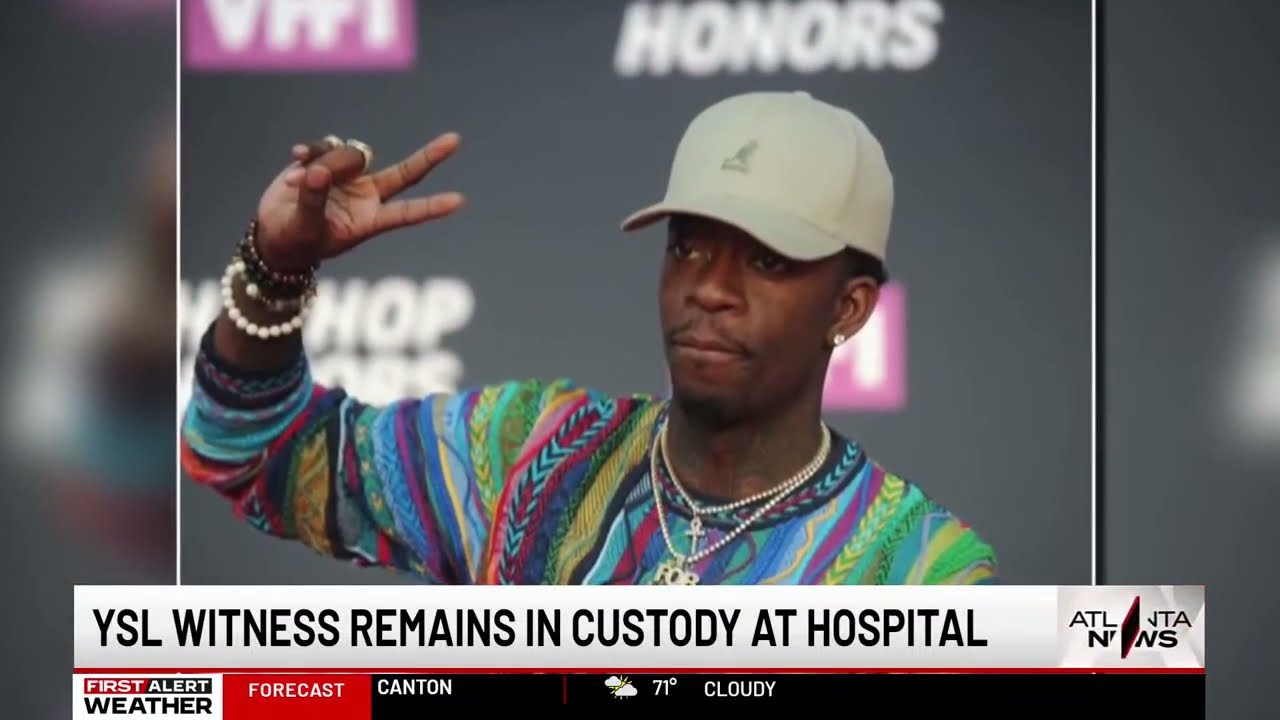 ▶ Play Wilson’s YSL analysis
 Listen on Apple Podcasts · 12 min
Exhibit 103 · August 5–6, 2024
What Trump said about Young Thug
During Adin Ross’s August 5 livestream, Ross raised Young Thug’s prosecution. Trump said he had heard the rapper was being treated unfairly and went on to speak of “these patriots” in the plural. The next day, VIBE’s Marc Griffin used the singular “Patriot” in his headline. Read the interview alongside the headline for Trump’s wording. These comments came after the July recusal.
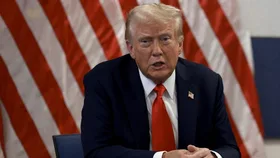 VIBE · Marc Griffin’s August 6 storyRoll Call / Factba.se · August 5 interview
Exhibit 104 · Trump and 3M in 2020
Three entries in the public record of the N95 dispute
April 2 · The order
Trump invoked the Defense Production Act and directed federal officials to acquire N95 respirators from 3M in quantities that FEMA deemed appropriate.
Read the White House orderApril 2 evening, Eastern time · The post
“We hit 3M hard today,” Trump wrote in a post criticizing the company over masks. The American Presidency Project preserves the post in its April 3 archive, which lists the post at 00:52.
Read Trump’s archived postSee the post as pictured (PDF, p. 9)April 6 · The agreement
3M announced a plan with the administration to import 166.5 million additional respirators into the United States over three months.
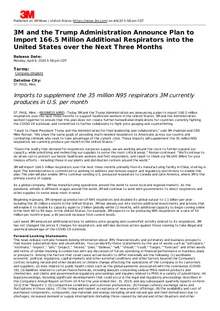 Read 3M’s announcement (PDF)3M supply timeline
These documents cover the dispute between Trump and 3M over the nation’s supply of protective equipment during the pandemic and the deal that followed. The plaintiffs filed their Minnesota employment cases in 2022, two years after the procurement dispute.
John Wingo · After the hearing
What Wingo wanted the chance to answer
Wingo returns to the phrase fight for your right to stay at your own Ex-Par-Tay. He left the courtroom as directed. Listening afterward, he realized he had an answer to a question he had never heard in the room. That is why he took the recording to Georgia.
Who stays when a judge asks a party to step outside? Will a reporter record the exchange? How can the absent party learn what was said, and when can that person respond? Wingo wishes he had known to ask those questions before he left the courtroom.
The plaintiffs can identify where the public transcript stops. The recording captures the question Wingo missed, and the April email identifies what he sent in Georgia. Whether the recording reached anyone beyond that circle remains open. A further dated record or a witness could help establish who else heard it. For the Minnesota hearing, the starting questions are simpler. Who was in the room? What does the record contain? Whose voice was missing?
Return to the Minnesota hearing evidenceThe Judges’ profilesPrevious chapter · 05 · A Father’s RecordNext chapter · 07 · Where the case stands today