


U.S. District Court · Minnesota
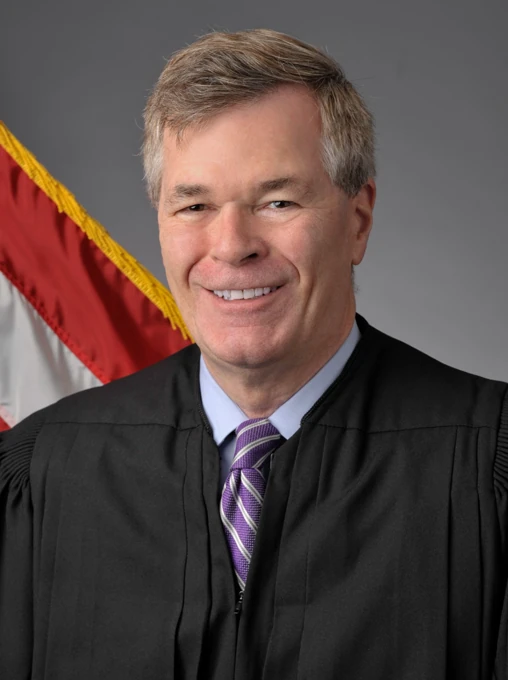
Ann D. Montgomery
Six names appear on Judge Ann D. Montgomery’s July 17, 2024 dismissal order. None of the six plaintiffs got to tell a jury what happened at 3M’s Aberdeen plant. Eleven months later, a father who had fought for ISIS stood before Montgomery and spoke for himself. His sons were there to hear him.
Read John Wingo’s commentary · Read the signed dismissal order
The judge asked. The plaintiffs were outside.
On October 13, 2023, in St. Paul, Magistrate Judge John F. Docherty heard the plaintiffs’ lawyers’ request to withdraw. Wilhelmina M. Wright was the assigned district judge. During the part of the hearing when the plaintiffs were outside, Docherty asked, “How much of this is true?” Attorney Brian Kluk answered, “Your Honor, as far as the allegations of the complaint, there is a great deal of it that is true.” Kluk pointed to recordings he believed supported some of the claims. The six plaintiffs could hear that exchange later. In the moment, their lawyer had the floor.
Play the question and Kluk’s answer · Read the certified public transcript
After Wright retired, the clerk reassigned John Wingo’s case to Montgomery on February 12, 2024. On June 14, Docherty filed a sealed report and recommendation covering all six cases. Montgomery adopted it on July 17. Her three-page order names John Wingo, Robert Rieger, Titus Kargbo, Desiree Holler, Vaughn Wingo and Nevely Randle. She wrote that she had independently reviewed the files, records and proceedings. Then she dismissed their complaints “with prejudice for failure to prosecute.” No jury decided whether the plaintiffs had experienced the harassment and retaliation they described.
Reassignment · entry 134 · Sealed recommendation · entry 143 · Dismissal order · entry 158
Who put Ann Montgomery on the bench?
Montgomery grew up in Litchfield, Minnesota. She earned a teaching degree at the University of Kansas and a law degree at the University of Minnesota in 1974. She went on to work as a federal prosecutor in Minnesota from 1976 to 1983. That year, Governor Rudy Perpich appointed her to the Hennepin County Municipal Court. She moved to the state’s Fourth Judicial District in 1985. In 1994, Minnesota’s federal district judges selected her as a magistrate judge.
Two Democrats figure in that history. Perpich gave Montgomery her first judgeship. President Bill Clinton nominated her for a federal district judgeship on November 27, 1995. The Senate confirmed her on August 2, 1996, and she received her commission four days later. She took senior status in 2016. The Wingo order gives a procedural reason for dismissal. It identifies no political beneficiary.
Minnesota Women Lawyers profile · Federal Judicial Center record · Wikipedia biography
Montgomery taught trial practice for more than a decade at the University of Minnesota Law School and mentored new federal judges. Her peers honored her for professionalism, courage and judicial excellence. For the plaintiffs, those honors raise a practical question. How would a judge teaching trial practice explain how a plaintiff could answer questions about his account from outside the courtroom?
District court history · pp. 48–49 · See the seven honors
The father who could speak for himself
Abdelhamid Al-Madioum grew up in St. Louis Park as a naturalized U.S. citizen. At eighteen he left a family trip to Morocco and traveled to Syria to join ISIS. He trained, served in a battalion and, after he was badly injured and lost his right arm, worked for ISIS as a personnel database administrator. He remained with the group until March 2019, when he surrendered to Syrian Democratic Forces. In January 2021 he pleaded guilty to providing material support to a designated foreign terrorist organization. Montgomery sentenced him to ten years in prison on June 13, 2024.
Justice Department · guilty plea · Justice Department · original sentence
At his June 17, 2025 resentencing in Minneapolis, his two sons sat with their grandparents. Father and sons waved to each other. Montgomery greeted the children when she took the bench. Prosecutor Andrew Winter described Al-Madioum’s help in a New York investigation and his testimony for the government at a Michigan trial. Both sides supported early release. Then Montgomery asked Winter to give that cooperation a grade.
“If you were a school teacher grading his cooperation, would you give him an A?”
Judge Ann D. Montgomery to Assistant U.S. Attorney Andrew Winter, as reported by MPR News
“Yes absolutely,” Winter answered. Al-Madioum stood at the lectern and spoke about steering others away from extremism. Montgomery reduced his prison term to time served, ordered up to six months in a halfway house and encouraged regular visits with his parents and sons. He had already spent years in custody and still faced fifteen years of supervised release. His children heard the decision in the room.
Matt Sepic’s report from the courtroom
John Wingo was outside when the judge asked the question
John Wingo · Commentary
John Wingo remembers where the two boys sat. They could see their father, and he could see them. When he stood up to tell the judge what he wanted to do with the rest of his life, his sons were close enough to hear him. Wingo was glad they heard it. When his own word was at issue, he wanted the same chance to look the judge in the eye and answer.
The grade for cooperation was an A. Wingo imagines putting that grade on a job application at Minnesota’s “LEARING CENTER.”
John Wingo and the other plaintiffs spoke out about the Aberdeen plant where they earned their living. For Wingo, that job meant being able to provide for his family. Bringing the case took time, and some of the people who had stood by him drifted away. After the order came down, he still had to figure out how to support his family. Looking back, he thinks the man who left for a halfway house sometimes had a clearer idea of his next step.
When Wingo describes the proceedings as corrupt, he points to a specific exchange. After Judge Docherty directed the plaintiffs to step outside, he asked their lawyer how much of their account was true. The lawyer answered that a great deal of it was. Wingo heard the exchange on playback. Months later, Judge Montgomery signed the order that ended all six cases. Wingo still asks how a plaintiff can defend his word if the question comes while he is out of the room.
Wingo wanted to tell the court what he had seen and what he could document. He knew 3M could challenge his account. He wanted the chance to answer in person.
If the boys went home and asked, “Dad, did you get to tell the judge what you wanted her to know?” their father could tell them yes. Wingo believes anyone who walks into an American courtroom deserves that opportunity. The father got to speak. When the judge asked about the plaintiffs’ allegations, Wingo was outside.
Hear the October exchange · The “LEARING CENTER” sign referenced in the joke